+8613706519013
 BHC Polimerų Priedai Co., Ltd / Šanchajus Crystal Wells Chemical New Materials Co., Ltd.


Uniform dispersion of rubber chemicals is essential for producing compounds with consistent processing and vulcanization behavior. When an accelerator is poorly dispersed, localized differences in accelerator concentration can affect cure behavior and may contribute to variations in the final rubber properties.
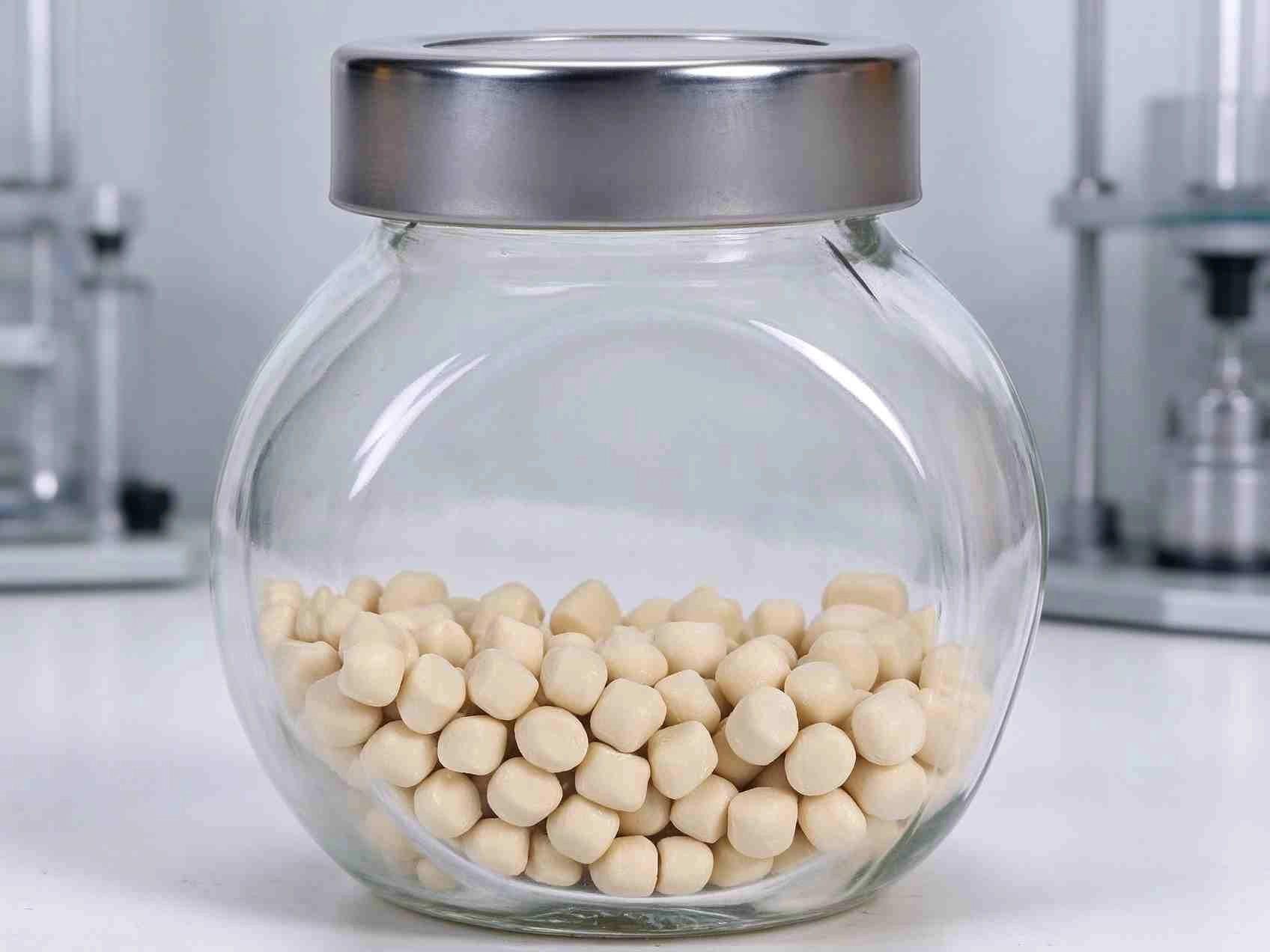
MBTS(DM)-75 is a pre-dispersed rubber accelerator containing approximately 75% dibenzothiazole disulfide (MBTS) in a polymeric carrier system. Unlike conventional MBTS powder, the active accelerator is incorporated into a controlled masterbatch form before it enters the rubber mixing process. This physical form can make the accelerator easier to incorporate and distribute throughout the rubber compound.
Why Is Dispersion Important in Rubber Compounding?
Rubber compounds usually contain several ingredients, including polymers, sulfur, accelerators, activators, fillers, plasticizers, and processing additives. These materials must be distributed sufficiently throughout the polymer matrix to achieve predictable processing and curing.
For an accelerator such as MBTS, dispersion is particularly important because its concentration influences the local vulcanization reaction. If accelerator particles remain concentrated in certain areas, those regions may experience different cure kinetics from the surrounding compound.
Good dispersion does not simply mean that the accelerator disappears visually. At the microscopic level, the objective is to distribute the active chemical sufficiently throughout the rubber matrix so that the curing system can behave consistently during subsequent processing.
How Does the Pre-Dispersed Form of MBTS(DM)-75 Help?
The main advantage of MBTS(DM)-75 comes from the way the active accelerator is incorporated into a polymeric carrier.
In a conventional powder system, individual MBTS particles must be incorporated into the rubber during mixing. Their behavior can be affected by particle size, agglomeration, feeding accuracy, mixing temperature, and the shear conditions inside the mixer.
With MBTS(DM)-75, the active MBTS is already distributed within the carrier system. Technical data for comparable MBTS-75 masterbatches indicate that the polymer-bound form can provide lower Mooney viscosity at lower temperatures and support more uniform dispersion during mixing.
This does not mean that the masterbatch eliminates the need for proper mixing. Instead, it gives the accelerator a more controlled physical form for incorporation into the compound.
Three factors are particularly important:
- ▶ Controlled incorporation: Granular masterbatch particles can be introduced into the mixer more consistently than a fine powder that may agglomerate or generate dust.
- ▶ Carrier-assisted distribution: The polymeric carrier becomes part of the rubber compound and helps the active MBTS move into the surrounding polymer phase during mixing.
- ▶ Consistent dosing: A defined active content, such as 75% MBTS, makes it easier to calculate and reproduce accelerator additions between batches.
Dispersion and Mixing Efficiency Are Closely Connected
The quality of dispersion depends not only on the accelerator itself but also on the mixing process.
Temperature, mixing time, rotor speed, fill factor, polymer type, filler loading, and the sequence in which ingredients are added can all affect how quickly an additive becomes distributed throughout the compound.
A pre-dispersed accelerator can simplify this process because the MBTS is not being introduced as an isolated powder that must first break down from individual particles or agglomerates. Instead, the masterbatch provides a polymer-compatible route for introducing the active ingredient.
Some commercial MBTS(DM)-75 technical information recommends adding the material during a later stage of mixing, although the appropriate addition sequence should always be established according to the specific formulation and mixing equipment.
Does Better Dispersion Automatically Mean Better Vulcanization?
Not necessarily.
This distinction is important when evaluating MBTS(DM)-75. Better physical dispersion can contribute to more consistent accelerator distribution, but the final cure characteristics depend on the complete vulcanization system.
Sulfur concentration, zinc oxide, fatty acids, accelerator combinations, rubber type, temperature, and cure time all influence the crosslinking reaction. MBTS itself is generally considered a medium-fast thiazole accelerator with good processing safety and can be used with other accelerator classes depending on the formulation.
Therefore, MBTS(DM)-75 should be evaluated as part of the complete compound rather than as an isolated ingredient.
When Is MBTS(DM)-75 Particularly Useful?
The pre-dispersed form can be valuable when a rubber manufacturer needs repeatable dosing and consistent incorporation of a thiazole accelerator across production batches.
It can be considered for compounds based on natural rubber and various synthetic rubbers, provided that the carrier and cure system are compatible with the formulation. Commercial MBTS-75 products are available for applications including industrial rubber products, cable-related compounds, and other sulfur-cured rubber systems.
For production environments, the granular form also offers practical handling advantages. Compared with fine accelerator powders, pre-dispersed masterbatches can reduce dust generation and make weighing and automated feeding easier. These handling improvements do not directly change the chemistry of MBTS, but they can contribute to more controlled raw-material management.
Conclusion
MBTS(DM)-75 improves the practical dispersion of MBTS primarily through its pre-dispersed polymer-bound form, controlled active content, and easier incorporation during rubber mixing. The carrier system helps the accelerator enter and distribute through the rubber compound, while the granular form supports more consistent handling and dosing.
For manufacturers evaluating a rubber accelerator, the important point is that dispersion is only one part of compound performance. MBTS(DM)-75 should be assessed together with the polymer type, sulfur and activator system, mixing conditions, cure curve, and target physical properties. When these factors are properly matched, a pre-dispersed MBTS masterbatch can provide a more controlled route for incorporating MBTS into rubber compounds.